Welcome to PossibNow, a newsletter for professionals learning to apply AI to work they know well. This issue looks at Tibo Sottiaux’s expanding and shrinking agent teams and asks what deserves a place in your own working day. You’ll find a perspective on cost and professional taste, followed by readings that help you assess useful applications and emerging possibilities.
What’s Next
I want AI working on problems that deserve the effort.
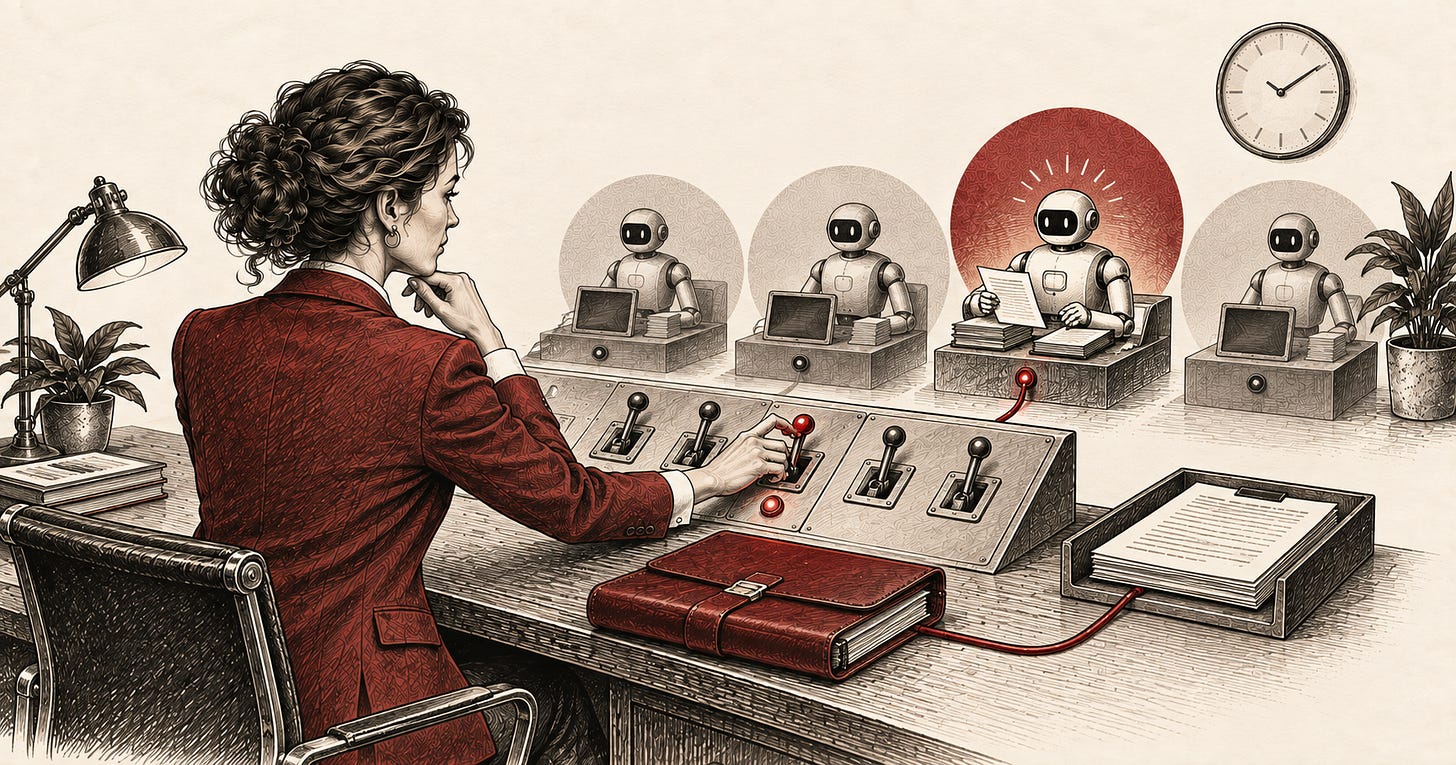
Listening to Tibo Sottiaux, who leads ChatGPT and Codex at OpenAI, I hear a compelling picture of work. Agents carry context, take on assignments, and keep moving while you turn your attention elsewhere. He describes an assistant that works around the clock and learns your preferences.
Then I start wondering how much of that picture translates to the rest of us.
Someone building the product inside an AI lab has a different vantage point from someone deciding whether to pay for it. Experimentation helps the lab discover what its models can do. A professional has to decide what that experimentation contributes to the work, and whether the result justifies the cost.
I don’t know Tibo’s internal compute budget. The interview doesn’t tell us what another company would spend to reproduce his setup. But I want that question alongside the excitement. What does this way of working cost when you have to buy it?
In Tibo’s defense, he describes something more interesting than an ever-growing army of agents. As he pushes the technology, he builds larger teams. When a better model can handle the assignment, he shrinks the team. Then the cycle starts again.
That leaves room for a future where a company can afford more useful AI without paying for more agents. A stronger model might consolidate work that previously needed several. We still need to see what happens to the bill, the quality of the result, and the time spent checking it.
I think the labs operate in a bubble. They are building toward a future they also have a commercial interest in selling. Their ambition can help us imagine new ways to work. Their own working habits deserve scrutiny before we adopt them.
This is where taste really matters. I think of taste as domain expertise applied to choices. You know your job and your industry well enough to recognize what fits, what helps, and what should stay out. Experience gives you reasons for those choices. Feedback helps you revise them.
For your professional work, begin with the assignment. What needs attention between meetings? What changes often enough to justify monitoring? Where does a delay cost you something? Where would another generated report add more reading without improving a decision?
As AI makes more work possible, we get more opportunities to exercise that taste. We also get more opportunities to bury a useful idea under unnecessary output.
Before you add an agent, name the work it will improve and the result that would justify keeping it. Always-on AI starts to make sense when you can explain why the work needs to continue.
Useful now
Your Country Needs Builders makes a case for giving capable people worthwhile problems, useful tools, and room to act. Its account of building and retiring the UK government’s Redbox AI tool offers a lesson beyond government. The team kept the experience needed to judge the next supplier after the software reached the end of its useful life. Build something small enough to learn from, including when you decide to stop.
The Lenny & Friends Summit talks
The complete collection brings together product and design leaders working through how AI changes their jobs. Start with Katie Dill’s talk on quality and artistry, or Karri Saarinen’s on context and product leadership. The collection gives you several perspectives on choosing what deserves building. Pick the talk closest to a decision you’re facing this week.
Claude + New Mods = Unlimited Possibilities
Jack Roberts’s video demonstrates ways to customize Claude Code, including usage displays and suggested next actions. Mods change the working environment around the model. They run in Claude Code’s CLI and desktop app, with the same machine access as Claude Code itself, so choose a trusted source and a specific improvement. Anthropic’s announcement explains the feature and its boundaries.
Addy Osmani’s essay examines what happens when generating work becomes easier than understanding it. His point extends to professional documents. If an agent gives you more than you can meaningfully review, change the assignment and the deliverable. Ask for something you can explain, check, and use before you accept more output.
Thanks for reading What AI makes PossibNow! Subscribe for free to receive new posts and support my work.
What’s possible
Could this finally be Microsoft’s moment?
Simon Green’s essay argues that Microsoft’s opportunity lies in bringing the working environment together around AI. Files, business context, identity, and administration all affect whether an agent can do useful work. Read this as a case for what Microsoft could deliver. Green distinguishes that opportunity from a demonstrated outcome and identifies features that remain in preview.
Mete Polat’s product critique argues that Muse makes agents easier to understand through a familiar chat experience and a clear idea of a personal helper. He also connects Meta’s consumer proposition to its advertising business. The useful question for professionals is how much complexity a product removes before you can begin the job. A friendly interface alone won’t establish whether the work earns its cost.
Ryo Lu’s essay explores what happens when everyone uses the same references and rewards to decide what to make. AI can accelerate that repetition. Read it alongside the opening’s point about taste. Bring a point of view to the work, including the details your experience tells you to care about, before asking AI to help produce it.
The loop this week
When you sit down to spin up your team of AI agents, pause. Figure out where they will help, where they provide real value, hold back the rest. Your taste matters. Apply it and get the best of both worlds.
Thanks for reading What AI makes PossibNow! Subscribe for free to receive new posts and support my work.
Get the next one on Friday.
Applied AI for professionals, by Sal Carranza. One workflow a week, free.